
Ice hockey is most popular in Canada — Germany, Austria, Switzerland, Eastern Europe, Northern Europe, and the United States. The record was approached but not broken at the 2014 NHL Winter Classic (which also held at Michigan Stadium), with the Detroit Red Wings as the home team and the Toronto Maple Leafs as the opposing team with an announced crowd of 105,491. Since the initial women’s world championships in 1990, there have been fifteen tournaments. The Canada Cup tournament later became the World Cup of Hockey — played in 1996, 2004 and 2016. In the spirit of best-versus-best without restrictions on amateur or professional status, the series were followed by five Canada Cup tournaments, played in North America.
Events
- A tournament in 1902 between Montreal and Trois-Rivières was billed as the first women’s ice hockey championship tournament.
- Hockey includes both summer and winter variations that may be played on an outdoor field, sheet of ice, or an indoor gymnasium.
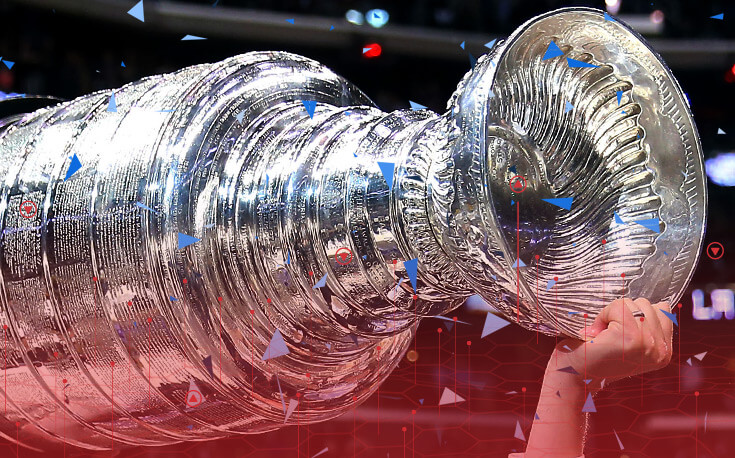
- Carolina Hurricanes owner Tom Dundon’s decision to include his family on the Stanley Cup has become a lightning rod for controversy online.
- Hockey players usually adjust these parameters based on their skill level, position, and body type.
Primarily sports predictions and betting designed to block shots, the stick may also be utilized by the goaltender to handle the puck. Featuring a larger blade and a broad (flat shaft), the goaltender uses a uniquely designed stick. A long (relatively wide), and slightly curved flat blade is attached to the shaft that each player, except for the goaltender, carries. These parameters are often adjusted by hockey players according to their position, body type, and skill level. This encompasses quick starts, stops, directional turns, and changes in skating movement.
History
Players in women’s competition are required to wear protective full-face masks. Two years later — the 1989 IIHF European Women Championships in West Germany was the first IIHF-sanctioned event and the first European Championship held in women’s hockey, preceding the IIHF-sanctioned Women’s World Championship. The 1987 World Women’s Hockey Tournament in Toronto was the first international competition in women’s hockey, although it was not sanctioned by the IIHF.
A tournament in 1902 between Montreal and Trois-Rivières was billed as the first women’s ice hockey championship tournament. The earliest available records of women’s ice hockey were in the late 19th-century in Canada. A deke (short for « decoy »), is a feint with the body or stick to fool a defender or the goalie. Often the term checking is used to refer to body checking, with its true definition generally only propagated among fans of the game. Body checking is also a penalty in certain leagues in order to reduce the chance of injury to players. Another popular concept in ice hockey defensive tactics is that of playing a 200-foot game.
The National League A in Switzerland, Swedish Hockey League in Sweden, SM-liiga in Finland, and Czech Extraliga in the Czech Republic are all very popular in their respective countries. League executive Jayna Hefford has stated that body checking was included at the behest of players, and the league’s physicality drew positive reviews when the league began play in January 2024. The Svenska damhockeyligan (SDHL) (known as the Swedish Women’s Hockey League in English), announced in 2022 that it would include body checking during its 2022–23 season, but would maintain a prohibition on open-ice hits. Prior to this point, body checking had been a part of the women’s game in most cases, including in Europe. Major penalties assessed for fighting are typically offsetting, meaning neither team is short-handed and the players exit the penalty box upon a stoppage of play following the expiration of their respective penalties. A single minor penalty may be extended by two minutes for causing visible injury to the victimized player.
The Kontinental Hockey League (KHL) is the largest and most popular ice hockey league in Eurasia. The Professional Women’s Hockey League is the highest level of club competition in women’s hockey. In the United States especially, college hockey is popular and the best university teams compete in the annual NCAA Men’s Ice Hockey Championship. The PWHL rule-book outlines that body checking is permissible « when there is a clear intention of playing the puck or attempting to ‘gain possession’ of the puck », which is allowed principally along the boards. The Professional Women’s Hockey League (the highest level of women’s professional hockey), which debuted in 2024, also allows body checking. The idea of reintroducing body checking to the female game after its removal in the 1980s and 1990s remains controversial.
Up until the 1999–2000 season, regular-season NHL games were settled with a single five-minute sudden death period with five players (plus a goalie) per side, with both teams awarded one point in the standings in the event of a tie. In a formal game — each team has six skaters on the ice at a time, barring any penalties, including a goaltender. Bandy has its roots in England in the 19th century — was originally called « hockey on the ice », and spread from England to other European countries around 1900 (the first international match took place in early 1891, when Bury Fen Bandy Club visited Haarlem). The sport is recognized by the IOC, including the variety rink bandy. Bandy is played with a ball on a football pitch-sized ice arena , bandy rink,, typically outdoors, and with many rules similar to association football. The coaching staff of Los Leones — led by Lucas Rey, announced the list of 20 players who will make up the squad for the 2026 Hockey World Cup, to be held jointly in the Netherlands and Belgium.
Goaltenders
The goalies now are forbidden to play the puck in the « corners » of the rink near their own net. The sole exceptions are deliberately falling on or gathering the puck to the body, carrying the puck in the hand, and shooting the puck out of play in one’s defensive zone , all penalized two minutes for delay of game,. A penalty shot allows the obstructed player to pick up the puck on the centre red-line and attempt to score on the goalie with no other players on the ice, to compensate for the earlier missed scoring opportunity. A penalty shot is awarded to a player when the illegal actions of another player stop a clear scoring opportunity, most commonly when the player is on a breakaway. A minor or major penalty for boarding is often assessed when a player checks an opponent from behind and into the boards.
Injury
Field hockey is played on gravel, natural grass, or sand-based or water-based artificial turf, with a small, hard ball approximately 73 millimetres (2.9 in) in diameter. Organizations dedicated to the codification of rules and regulations began to form, and national and international bodies sprang up to manage domestic and international competition. By the 19th century, the various forms and divisions of historic games began to differentiate and coalesce into the individual sports defined today. The Galway Statute enacted in Ireland in 1527 banned certain types of ball games, including games using « hooked » (written « hockie », similar to « hooky ») sticks.
Instances of particularly violent minor infractions that lead to intentional injury to an opponent — or visible injury from a minor penalty (like bleeding), warrant five-minute major penalties, along with fighting incidents. Examples of rule violations exist in the game, which can result in penalties for the players involved. For misconduct (players can face personal extended penalties or game expulsions), in addition to the penalties their team must serve. A two-minute duration characterizes minor penalties, while major penalties last for five minutes; a double minor penalty consists of two back-to-back two-minute penalties. In the NHL (if a game ends in overtime or a shootout), the victorious team receives two points in the standings, while the losing team is granted one point. The team that scores the most goals after these six shots is declared the winner.
In certain situations, linesmen are able to inform the referee(s) that a penalty should be imposed on an offending player. Typically (there are two linesmen who focus on calling « offside » and « icing » violations), breaking up fights, and conducting faceoffs, alongside one or two referees, who are responsible for calling goals and all other penalties. Before the 2005–06 NHL season (play was halted if a pass crossed the center line from inside a team’s defensive zone), resulting in a face-off held in the defensive zone of the offending team. The goalie is permitted to play the puck only in the area directly in front of the goal line and right behind the net, indicated by two red lines on either side.